Multi-Analytical and In Silico Evaluation of Commercial Liquid Smokes: Volatile Profiling, Polycyclic Aromatic Hydrocarbons Safety Assessment and Molecular Mechanisms against Deoxyribonucleic Acid Gyrase B
Abstract
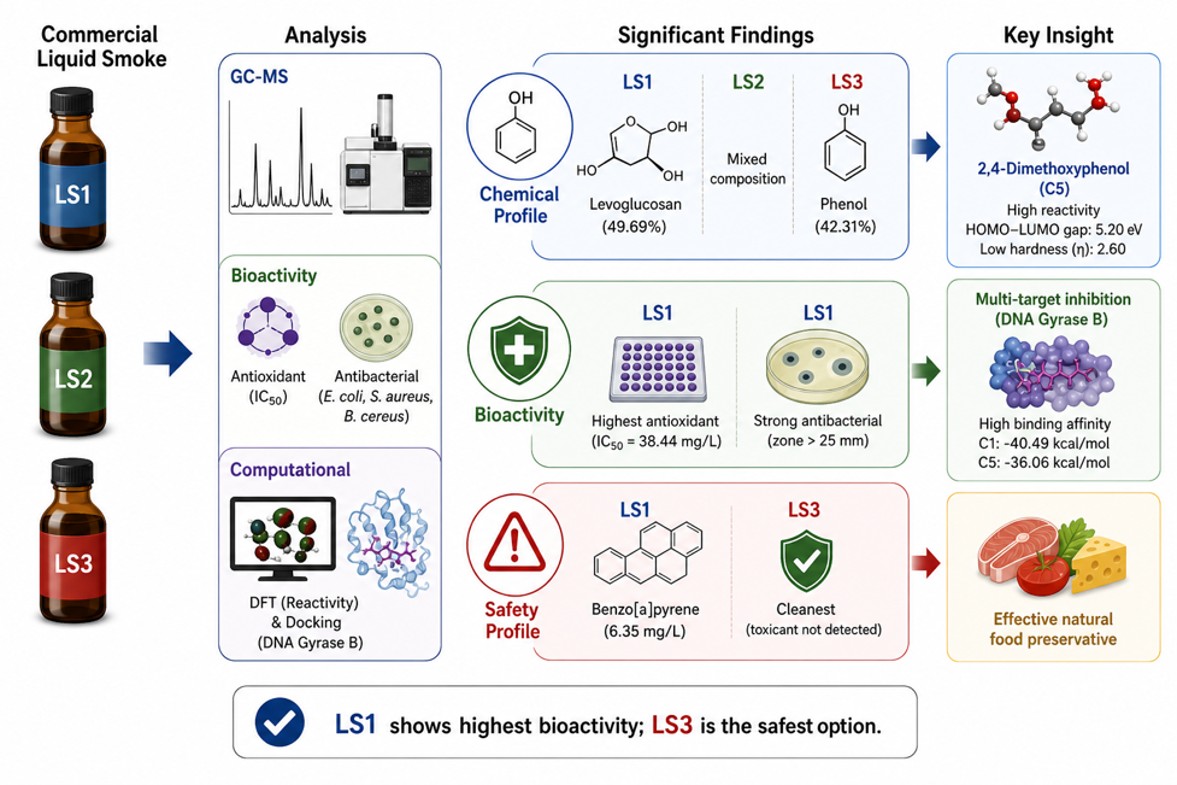
Liquid smoke is increasingly utilized as a natural food preservative; however, the chemical standardization and sub-atomic mechanisms of commercial brands remain inadequately understood. This study evaluates the physicochemical characteristics, volatile profiles, and antioxidant/antibacterial potencies of three commercial liquid smoke brands (LS1, LS2, and LS3) through an integrated experimental and computational framework. Gas Chromatography-Mass Spectrometry (GC-MS) analysis identified 59 volatile constituents, revealing distinct chemical fingerprints ranging from cellulose-derived levoglucosan in LS1 (49.69%) to phenolic-rich profiles in LS3 (phenol: 42.31%). Safety assessments highlighted that while all brands demonstrated efficacy, only LS1 contained detectable levels of the regulated carcinogen benzo[a]pyrene (6.35 µg/L), whereas LS3 exhibited the cleanest toxicological profile. Experimentally, LS1 showed the highest antioxidant potency (IC50 = 38.44 µg/L) and antibacterial efficacy against E. coli, S. aureus, and B. cereus (inhibition zones > 25 mm). Density Functional Theory (DFT) calculations corroborated these findings, showing that the superior reactivity of 2,4-dimethoxyphenol (C5) is driven by a narrow HOMO-LUMO energy gap (5.20 eV) and low global hardness (η = 2.60). Furthermore, molecular docking confirmed that these volatiles act as multi-target inhibitors, with 2-furanmethanediol dipropionate (C1) and C5 showing high binding affinities (Grid Scores: -40.49 and -36.06 kcal/mol) for the ATP-binding pocket of Deoxyribonucleic Acid Gyrase B.