Furcellaran and Calcium L-threonate Synergistically Reinforce the Structural and Functional Properties of Fish Gelatin Hydrogels
Abstract
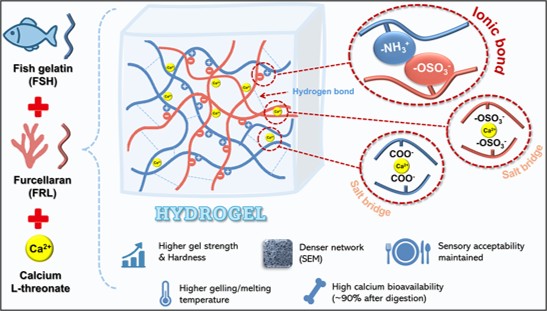
The effects of furcellaran (FRL) and calcium L-threonate on the properties of fish gelatin (FSH) hydrogels were examined. Incorporation of FRL alone slightly improved gel strength, while FRL in combination with calcium significantly enhanced textural properties in a dose-dependent manner (p < 0.05). Gel strength of the highest calcium addition used (1200 mg) reached 628.67 g and hardness increased by 195% compared to the control (FSH hydrogel without incorporation). Intermolecular force analysis and SEM confirmed that Ca2+ bridging between FSH and FRL chains promoted ionic and hydrogen bonding, resulting in a denser and more thermostable network. Gelling and melting temperatures of calcium incorporated hydrogels increased to 44.78 °C and 48.18 °C, respectively, enabling gelation at room temperature with improved thermostability. Although higher calcium levels increased syneresis and reduced springiness and cohesiveness, hydrogels maintained high calcium bioavailability (80-90%) after digestion through gastrointestinal tract model system. Sensory evaluation showed slight reductions in appearance, firmness, and mouthfeel, but overall acceptability scores remained above 7. These findings suggested that the incorporation of FRL and calcium L-threonate in FSH hydrogels effectively enhanced the functionality and nutritional value, supporting their application as calcium-fortified foods and nutraceuticals.