The Development of Seeds in a Medicinal and Edible Ficus Species: Transcriptome Analysis Focusing on Hormone Dynamics and Related Signaling Genes in Ficus hispida
Abstract
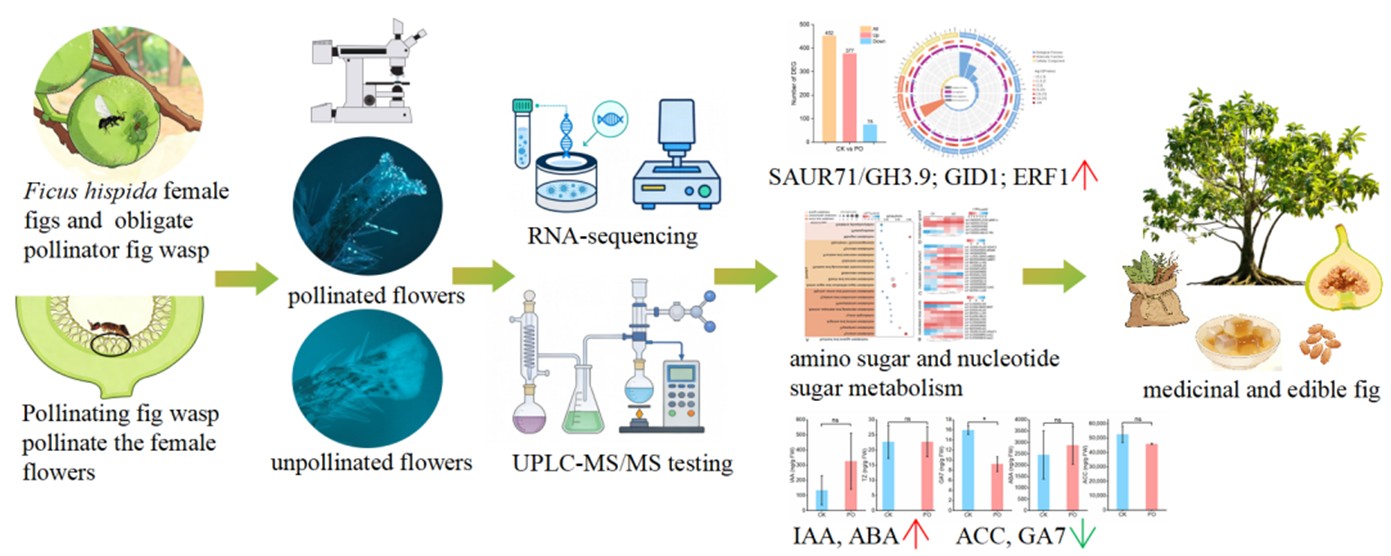
Fig trees (Ficus) are widely used in landscaping, traditional medicine, and food. Their obligate mutualism with fig wasps makes them key models for coevolution studies. In dioecious figs, pollinators enter both female and male figs, but only female figs produce seeds—yet the mechanism remains unclear. In Ficus hispida, we found pollen tubes reached the ovaries and fertilization completed within 3-day. Integrated transcriptomic and metabolomic analysis indicated that the content of auxin (IAA) and abscisic acid (ABA) increased after pollination, while 1-aminocyclopropane-1-carboxylic acid (ACC) and gibberellin-7 (GA7) decreased. Trans-zeatin (TZ) content remained stable compared to unpollinated figs. In the early stage of pollination, the female flower may have activated the processes of ovary growth and seed formation by significantly enhancing the expression of the auxin early responder gene SAUR71/GH3.9, the gibberellin receptor gene GID1, and the ethylene response factor ERF1. Meanwhile, significantly enriched pathways-including amino sugar and nucleotide sugar metabolism, pentose and glucuronate interconversions, tyrosine metabolism, and nitrogen metabolism which supply energy and precursors for female flower development and seed formation. Our results show that pollination reprograms hormonal signaling and metabolism in female flowers, directing them toward seed development instead of gall formation. This advances understanding of how pollinators regulates plant development.