Freshwater Algal Biostimulant Improves Heat and Drought Tolerance in Cherry Tomato under High-Temperature Greenhouse Conditions
Abstract
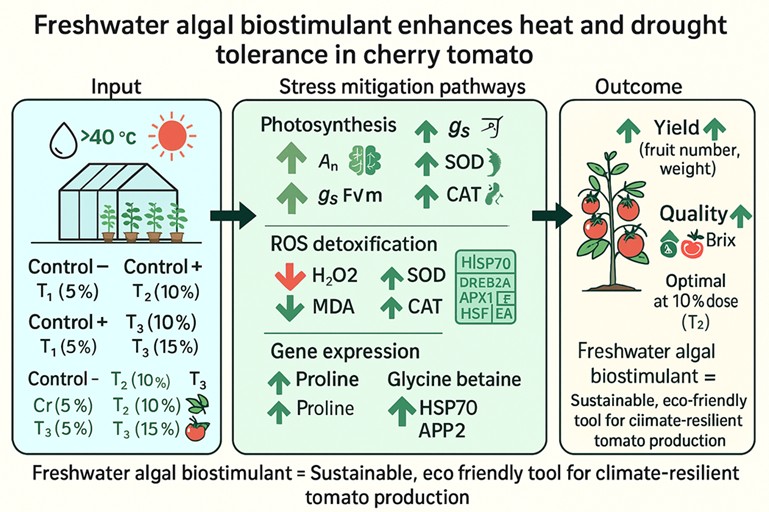
Rising global temperatures and increasing frequency of drought events associated with climate change pose significant challenges to greenhouse tomato production. Algal-based bio stimulants rich in bioactive compounds, particularly amino acids derived from freshwater algae, have emerged as promising tools to enhance plant stress tolerance and growth which appropriated to modern agricultural. This study evaluated the potential of a freshwater algal bio stimulant to enhance heat and drought tolerance in cherry tomato (Solanum lycopersicon var. cerasiforme) cultivated under high-temperature greenhouse conditions (40–43 °C). A factorial experiment (irrigation regime × bio stimulant dose) was conducted using a randomized complete block design with four replications. Physiological, biochemical, and molecular responses were assessed, including gas exchange, chlorophyll fluorescence, ROS accumulation, antioxidant enzyme activities, osmolyte levels, and the expression of stress-related genes (qPCR). Bio stimulant application (2–4 mL L-1) significantly improved photosynthetic efficiency, mitigated oxidative damage, increased osmolyte accumulation, and upregulated stress-responsive genes, ultimately resulting in higher yield and improved fruit quality under combined heat and drought stress. These findings highlight the potential of algal-based bio stimulants as sustainable inputs for climate-resilient tomato production.