Pharmacokinetic and Inhibitory Properties of Phytosterols from Shorea beccariana Against α-Glucosidase: Integrated in vitro and in silico Studies
Abstract
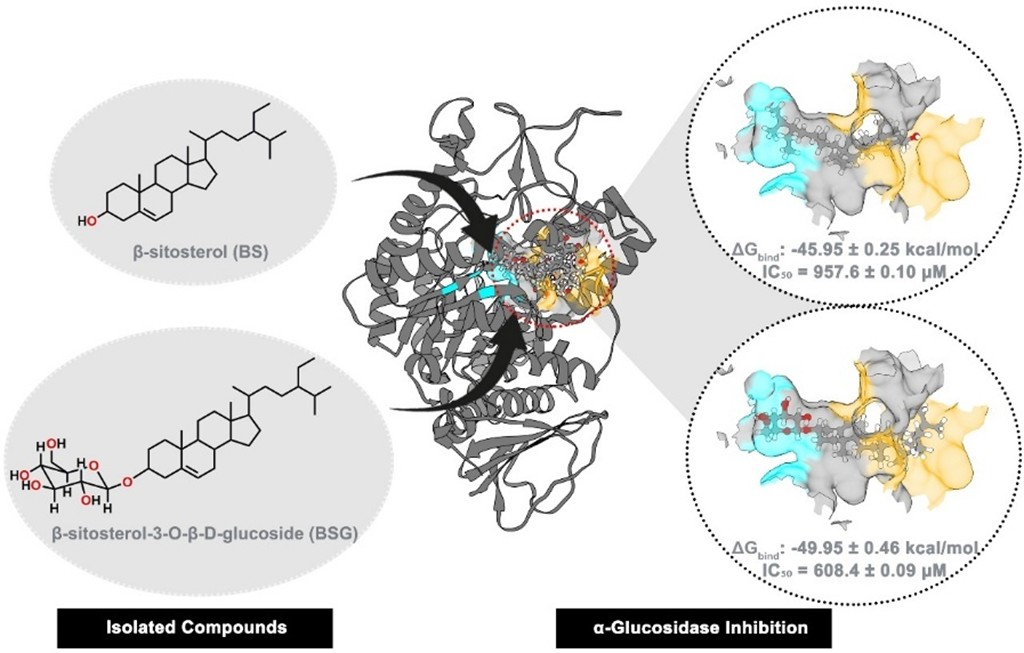
Diabetes mellitus remains a major global health challenge, and the discovery of novel α-glucosidase inhibitors from natural products offers a promising strategy for managing postprandial hyperglycemia. Although synthetic inhibitors such as acarbose are clinically effective, their gastrointestinal side effects drive the search for safer alternatives. A phytochemical investigation of Shorea beccariana led to the isolation of β-sitosterol (BS) and β-sitosterol-3-O-β-D-glucoside (BSG). Pharmacokinetic predictions indicated favorable drug-likeness and higher bioavailability scores for both compounds compared to acarbose. In vitro α-glucosidase inhibition assay showed that BSG (IC50 = 608.4 ± 0.09 µM) exhibited comparable inhibitory potency to acarbose (IC50 = 619.1 ± 0.30 µM), whereas BS (IC50 = 957.6 ± 0.10 µM) showed weaker activity. Molecular docking and molecular dynamics simulations further confirmed stable binding of both compounds within the enzyme’s active pocket, with BSG forming multiple hydrogen bonds and displaying the most favorable free binding energy (ΔGbind = −49.95 kcal/mol) based on the QM/MM-GBSA method. Collectively, this study not only identifies BSG as a promising natural α-glucosidase inhibitor but also provides the first mechanistic insight into phytosterols from S. beccariana as potential antidiabetic leads. Further in vivo validation and formulation strategies, such as cyclodextrin encapsulation, are recommended to enhance therapeutic potential.