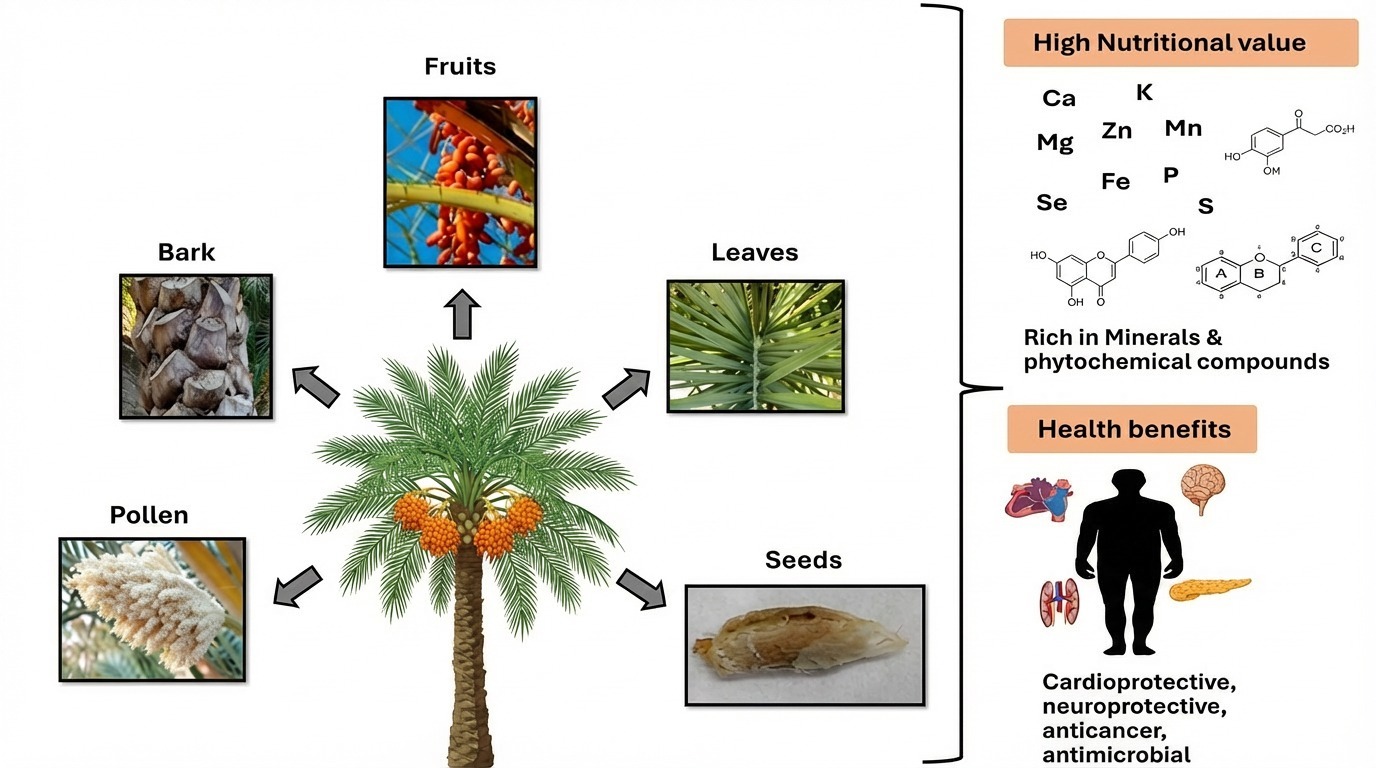
An Overview of the Date Palm (Phoenix dactylifera): A Natural Powerhouse for Human Nutrition and Health
Abstract
Date palm (Phoenix dactylifera L.), an ancient crop of the Arecaceae family, is an angiosperm and monocotyledon encompassing over 200 genera and 2,500 species. Valued for its nutritional and health benefits, date palm fruits have traditionally provided instant energy, aided digestion as a source of dietary fiber, and helped manage gastrointestinal disorders. Products such as date syrup or honey have been used for respiratory illnesses, while the fruits are known to reduce inflammation in arthritis. Various date varieties are rich in phytochemicals, which contribute to antimicrobial, cardioprotective, anti-inflammatory, neuroprotective, antioxidant, and anti-diabetic effects. Despite extensive studies on its phytochemical composition and long-standing traditional use, the application of these compounds in nutrition and health remains limited. Further research is needed to fully explore the potential of date palm as a nutritional and therapeutic resource.