Determination of Polysaccharide Content, Optimization of Extraction Conditions, Monosaccharide Composition and Antioxidant Activity Study in Different Varieties of Gastrodia elata Blume
Abstract
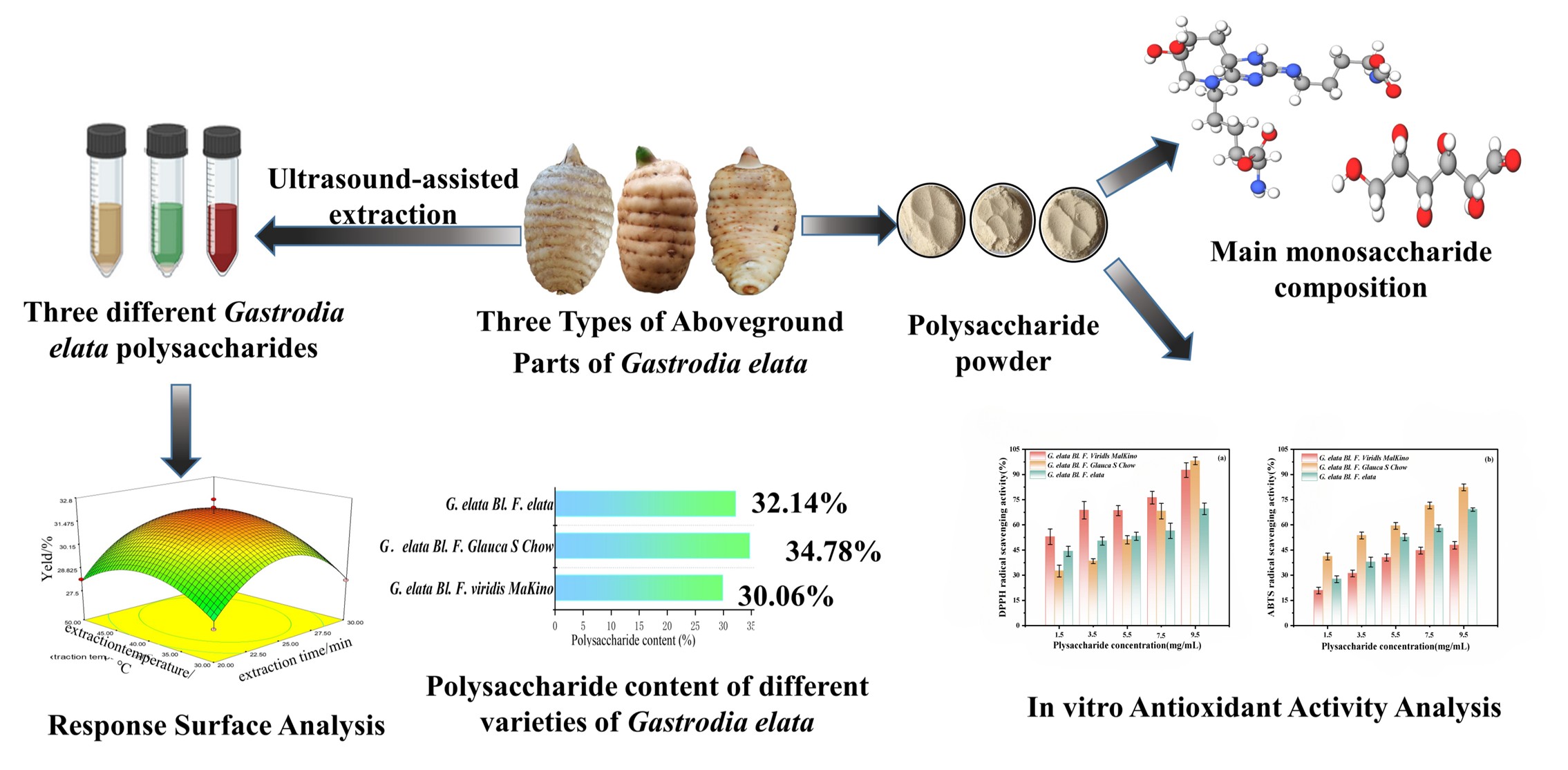
This study investigated the impact of various extraction conditions, such as liquid-to-solid ratio, ultrasonic temperature, and extraction time, on the yield of Gastrodia elata polysaccharides through single-factor experiments. The polysaccharide extraction conditions were optimized using response surface methodology by constructing a quadratic polynomial regression model. Monosaccharide composition and content in different varieties of Gastrodia elata were determined using high-performance liquid chromatography (HPLC), and the in vitro antioxidant activity of these polysaccharides was analyzed. The results revealed that the optimal conditions for determining the polysaccharide content of G. elata using the 3,5-dinitrosalicylic acid method were as follows: a detection wavelength of 540 nm, 2 mL of chromogenic reagent, a chromogenic time of 6 minutes, a chromogenic temperature of 90 °C, a total sugar hydrolysis time of 10 minutes. Through response surface experiments, the optimal extraction conditions for the polysaccharides were determined: G. elata polysaccharides were primarily composed of six monosaccharides, with glucose accounting for over 95% of the composition, along with galactose, mannose, rhamnose, and so on. This study provides a theoretical foundation for the environmentally friendly determination of polysaccharide content in G. elata and the composition of its nutritional components, specifically its polysaccharides.