Unravelling the Chloroplast Genome of the Rare Relict Xerophytic Plant Malacocarpus crithmifolius using MinION Long-Read Sequencing: Insights from Arid Ecosystems of Central Asia (Mangystau, Kazakhstan)
Abstract
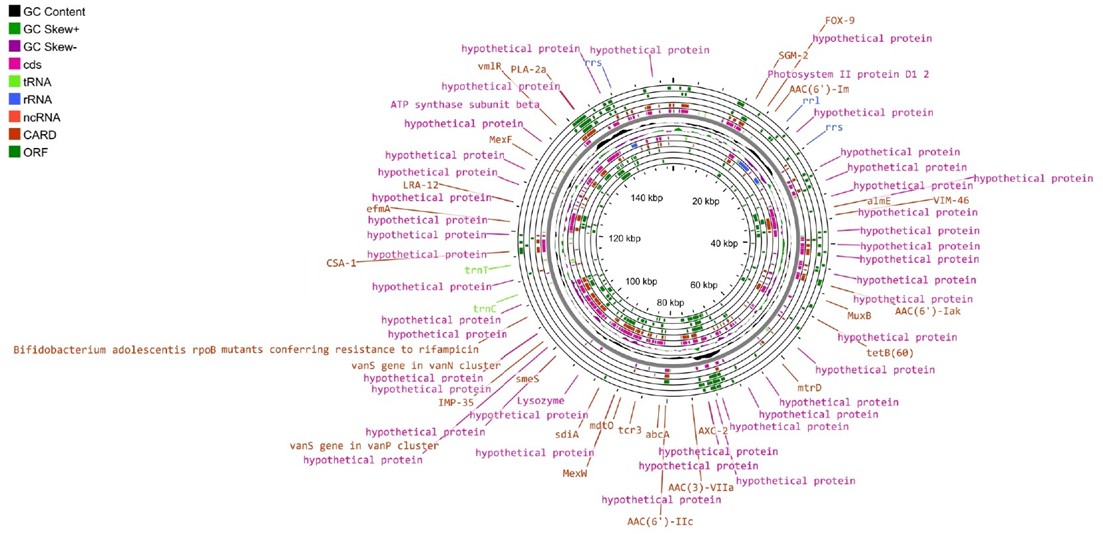
This study presents the first complete sequencing and annotation of the chloroplast genome of Malacocarpus crithmifolius (Retz.) Fisch. & C.A. Mey., a rare relict xerophytic species distributed across arid regions of Central Asia, with particular focus on populations from the Mangystau region of western Kazakhstan. Oxford Nanopore Technologies (ONT) MinION long-read sequencing was employed to evaluate the effectiveness of third-generation sequencing for assembling complex plastid genomes characterised by repetitive elements. High-molecular-weight DNA was successfully isolated using an optimised CTAB-based protocol, yielding DNA concentrations of 60–80 ng/μL with OD260/280 ratios of 1.8–2.0, suitable for long-read sequencing. The assembled chloroplast genome was 158,033 bp in length with an average sequencing depth of 25×. Long-read sequencing substantially improved assembly continuity, producing reads with an average length of 19,754.1 bp and a maximum length of 54,072 bp, thereby overcoming limitations commonly associated with short-read sequencing in repeat-rich regions. A total of 86 genes were annotated, including 57 protein-coding genes, 25 transfer RNA (tRNA) genes, and four ribosomal RNA (rRNA) genes. The plastome encodes key functional genes involved in photosynthesis (e.g., psbA, psbB, psbC), transcription and stress-related regulation (rpoB, rpoC1, accD), and energy and metabolic processes (ndhA, ndhB, atpA). Genome-wide nucleotide composition analysis revealed a GC content of 39.1% and moderate GC skew variation (−0.12 to 0.08), consistent with plastome organisation observed in other xerophytic and halophytic members of Nitrariaceae and potentially reflecting long-term adaptation to arid environmental conditions. The chloroplast genome presented here represents a vital genetic resource for M. crithmifolius and provides a molecular foundation for future phylogenetic, evolutionary, and conservation-oriented studies. More broadly, the results demonstrate the high utility of MinION long-read sequencing for plastome reconstruction in rare and relic plant species from extreme environments, highlighting its potential for advancing conservation genomics and evolutionary research in arid ecosystems.