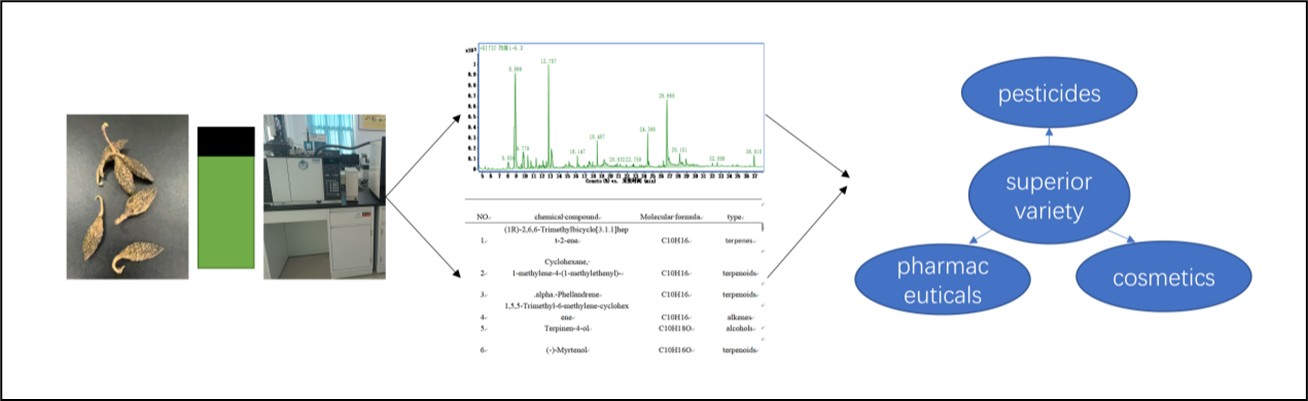
A Study on Dynamic Changes of Volatile Components in Forsythia Fruits from Different Genetically Provenances Based on Gas Chromatography-Mass Spectrometry and Chemometrics
Abstract
Forsythia suspensa (Thunb.) Vahl is a well-documented medicinal plant in traditional Chinese medicine, with its fruits (Fructus Forsythiae) clinically utilized for dispelling wind-heat, clearing heat-toxin, and alleviating swelling to resolve nodules. Despite its established ethnopharmacological significance, the exploitation of its medicinal potential is hindered by inadequate in-depth investigation of comprehensive bioactive components and insufficient dissemination of elite cultivars. In this study, a novel ethanol-based extraction protocol was developed and coupled with gas chromatography-mass spectrometry (GC-MS) for the qualitative and quantitative analysis of volatile constituents in F. suspensa fruits collected from five Genetically distinct provenances. The findings of this study not only comparatively analyzed the volatile bioactive components in F. suspensa fruits of different germplasms, but also offer a scientific basis for the breeding of high-quality cultivars and the rational development of ethanol-extracted functional products derived from Fructus Forsythiae.