Microscopic Morphology and Electrical Properties of Nano-Hexagonal Boron Nitride/ Low-Density Polyethylene used for Agricultural Underground Cable Insulation
Abstract
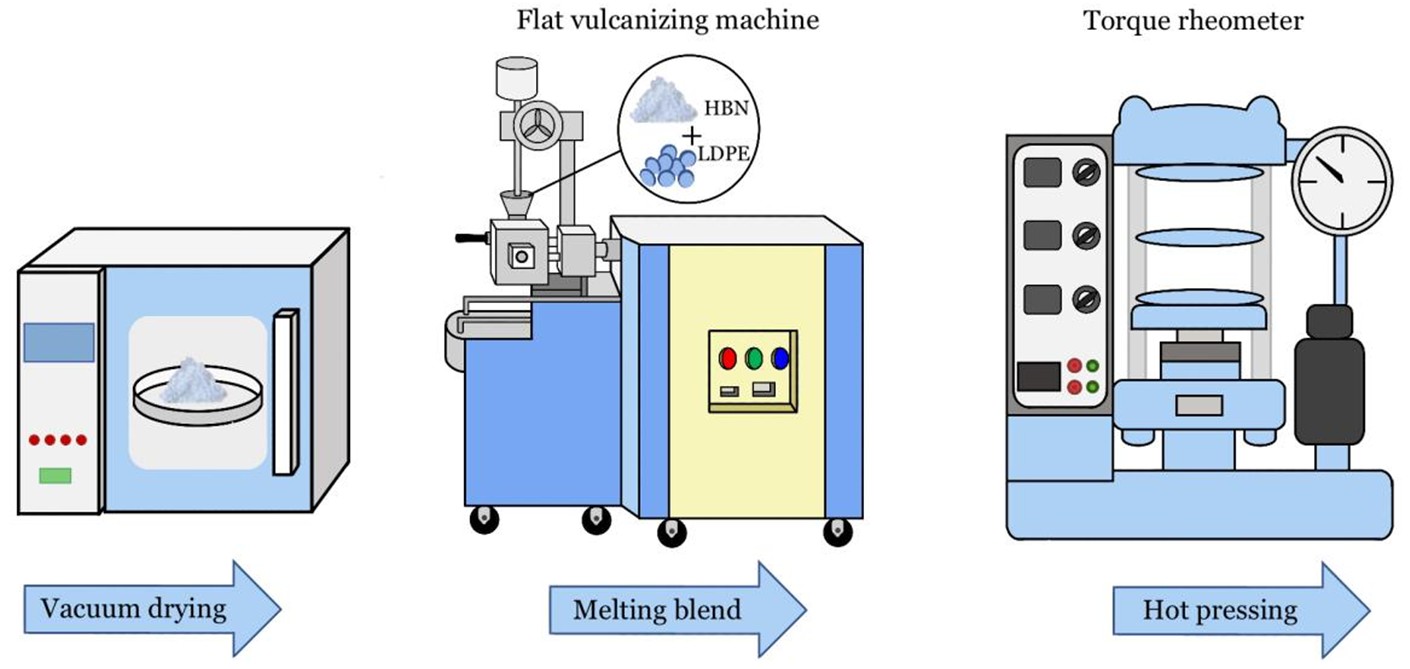
Low-density polyethylene (LDPE) possesses advantageous properties, including excellent heat resistance and electrical conductivity, which have become the focus of significant research for cable insulation applications. In this study, a two-dimensional axisymmetric cable simulation model with electrical–mechanical multi-physics coupling was built. The effects of different HBN mass fractions on the electric field distribution, space charge characteristics, and mechanical stress in the insulation layer were fully explored. Nano- hexagonal boron nitride/ low-density polyethylene samples of different mass fractions were prepared using a melting blend. The microscopic morphologies of the samples were observed by scanning electron microscope and polarized light microscopy (PLM). The crystallization characteristics of the nanocomposites were characterized by differential scanning calorimetry (DSC). The breakdown characteristics of the nanocomposite under a DC electric field were studied. Finally, the effect of the nano-HBN particles on the matrix toughness was explored by tensile testing. The elastomer retained its mechanical properties, but some of its electrical properties were lost. To improve the comprehensive performance of agricultural underground cable insulation, high-toughness and high-insulation nano-HBNs were introduced into an LDPE matrix.