1. Introduction
At
present, energy consumption is continuously increasing in line with economic
growth rate thus the energy demand increases. Especially fuel energy, in the
form of refined oil, is in high demand, and is an important proportion in the
transportation and industrial sectors of every country. Much of the oil comes
from depleted fossil fuels with declining reserves and is likely to run out in
the near future.[1,2] Therefore
government agencies are pushing the search for new energy sources to replace
existing ones. Biodiesel therefore plays an important role, because it has
similar properties to petroleum and can be used in diesel engines without modification.[3-8] Biodegradable
low emissions to the environment in the form of carbon dioxide or sulfur
provide complete combustion. The exhaust gas has better quality than that from
combustion of diesel fuel, and is therefore environmentally friendly. The raw
materials for biodiesel production are vegetable oils, animal fats and short
chain alcohols. The oils most used for biodiesel production are derived from
rapeseed,[9] soybean,[10]
palm,[11] jatropha,[12]
and sunflower,[13] although
other oils are also used, including waste cooking oil,[14,15] and also animal fats.[16-19] Transesterification uses an
alcohol (e.g. methanol, ethanol) to chemically break the molecule of the
renewable feedstock into methyl or ethyl esters (biodiesel) with glycerol as
the only by-product.[20] The
transesterification reaction is represented by the general overall reaction
shown in Fig. 1.

Fig. 1 The overall transesterification reaction
of triglyceride. Reproduced with the permission from [20], Copyright 2016 Elsevier Ltd.
Biodiesel
is an alternative energy source synthesized by transesterification of vegetable
oils or animal fats, containing triglyceride organic compounds, using acids or
bases as catalysts to convert oil molecules into alkyl esters.[21] Catalysts, reviewed by researchers,[22-24] include homogeneous catalysts such
as sodium hydroxide,[25]
potassium hydroxide,[26]
sulfuric acid,[27] and
hydrochloric acid etc.[28]
Heterogeneous catalysts, for example various single metal oxides (MgO, CaO, SnO2, ZnO, CeO2, ZrO2 (mixed metal oxides,
zeolites, Al–Mg hydrotalcites, have also been used.[29]
The
homogeneous catalyst, NaOH, is commonly used due to its rapid solubility in
methanol, so the reaction is faster than with acids.[30] For this
reason, water is required to flush the product, which wastes energy to separate
the catalyst from the product. Further large quantities of contaminated washing
water affect the environment and waste energy in the needed wastewater treatment.[31,32] Easy to restore and reuse, CaO is a
natural solid base catalyst, easily extracted from waste, such as eggshells,
containing CaCO3, which is
readily converted to CaO through high-temperature calcination. Thus, CaO is an
inexpensive, environmentally safe, non-corrosive, eco-friendly, substance,
which is very active, under mild conditions and can be regenerated.[33-36] CaCO3 in eggshells, when
calcined at sufficiently high temperatures (700 – 1,000 °C)
converts to CaO.[37] Natural
CaO can be used as a substitute for commercial catalysts for biodiesel
production and in addition to being useful as a catalyst, its production from
waste increases the value of the waste as well. However, CaO has some
limitations, particularly easy gelation in methanol and a low specific surface
or active site area, resulting in a decrease in catalytic efficiency.[38,39]
2. Experimental section
Black
Acid Oil (BAO) was obtained Saengsook Industry
Company and was filtered to remove impurities. All chemicals used in the
experiments such as methanol of 99% purity and sulfuric acid (95%) were of
analytical reagent grade.
2.1 Preparation of calcium oxide from
charcoal ash by calcination
The
biomass was burned in the atmosphere to form ash at the bottom of the stove;
the ash sieved through a 40 mesh sieve into a crucible
and closed tightly; then calcined in a muffle furnace model Carbolite RHF1600,
Germany at 700, 900 and 1,000 °C for 120 min and at 1000 °C for 240 min. The ash was stored in a
zip-lock bag to prevent moisture adsorption and stored in a desiccator with silica gel.
2.2 Black acid oil preparation
The
raw black acid oil was first filtered through a white cloth folded in five layers to remove impuritie. It was then boiled to expel water (boil, 60 min). After that, the oil
was cooled and vacuum filtered through 110 mm filter paper and the oil
properties were checked.
2.3 Acid-catalyzed esterification
process
The
objective of the first step is to reduce free fatty acid of the black acid oil
to about 2%. The black acid oil (300 g) was poured into the reactor.
The reaction mixtures consist of black acid oil, 99% methanol and 95% sulfuric acid.
Sulfuric acid catalyst was added in 0.5%, 0.75% and 1.5% concentrations (w/w)
of the mass of oil in methanol and then added to the reactor. The methanol and
oil mixtures in 6:1, 18:1 and 21:1 v/v ratios were added to reactor. The
reaction temperature was 30 oC and time was 120 min. After
completion of the reaction, the mixture was allowed to settle for 24 h. Then,
gumming, methanol and water fraction at the bottom layer was removed. FFA of
the product was determined by titration. The condition produced the least free
fatty acid was selected and used for thebase
catalyzed trans-esterification reaction.
2.4 Base-catalyzed trans-esterification
process
In
the second step, optimal CaO concentrations were investigated. Firstly, the oil
from the first step was poured into the
reactor. CaO powder, at 1.0% to 7.0% (w/w) as a catalyst, was added to a 200 g
mass of methanol and oil mixture (12:1 v/v) and poured in the reactor, which
was heated to 60 °C,
slightly less than the methanol boiling point – 68 °C,
60 min reaction time. After completion of
the
reaction, the mixture was allowed to settle for 24 h. The mixing of CaO and
methanol settles at the bottom of the funnel, where is small amount of
catalyst, methanol and glycerol are in the upper biodiesel layer. The upper
layer was collected for further purification by washing with hot water. After
final washing and drying, the yield of biodiesel and its properties were
determined.
2.5
Investigation
of properties of acid black oil
Free
Fatty Acid (FFA) – 25 mL 0.1 N NaOH solution was placed in a burette and 50 mL
isopropyl alcohol placed in a 250 mL conical flask to which a few drops of 0.1
N NaOH solution was added. 10 g oil was added to the conical flask, shaken well
and heated to 60 °C. Then, the mixture was allowed to cool
at room temperature and titrated against 0.1 N NaOH from the burette using
phenolphthalein indicator. The volume of NaOH used in the titration to obtain a
pink solution as Fig. 2a, was recorded and used
to calculate the free fatty fraction as in Equation
(1):
 (1)
(1)
where,
V is the volume of NaOH used (mL) and W is the mass of oil used (g).
Density
– The mass of oil needed to fill a volumetric flask was determined by
difference and the density calculated as in Equation
(2):
 (2)
(2)
where,
W is the mass of oil (g) and V is the volume of Pycnometer (mL).
Viscosity
– Viscosity was measured by timing the flow of a fixed volume of oil in a
Cannon-Fenske Viscometer TUBE No. 100/32 (Direct type) and converting to
viscosity using the calibration constant. The viscometer tube was held in a
water-bath at 40°C for at least 20 min. From Fig. 2b, record the time and calculate the kinematic
viscosity as in Equation (3):
 (3)
(3)
where,
V is kinetic viscosity (centistoke, cSt), C is
calibration factor of the bulb of the viscometer tube used for testing (cSt/s) and t is the time (s).

Fig. 2 Apparatus
used to determine the properties of sampled oils.
Flash
point – The flash point of a volatile liquid is the lowest
temperature at which it can vaporize to form an ignitable mixture in air.
Pensky-Marten's closed cup tester measures the lowest temperature at which the
application of the test flame causes the vapor above the biodiesel sample to
ignite. It is used to assess the overall flammability hazard of the biodiesel.
Specifically, the flash point is used in safety regulations to define the
"flammable" and combustible materials. Higher values indicate
materials that are less likely to ignite accidentally. Flash point experiment
is shown in Fig. 2c.
Heating
value – was determined using Bomb calorimeter brand
GALLENKAMP model ADIAMBATIC using firing cotton model CBA-535-B, length 10 cm,
crucible type nickel-chromium type model CBA-450-C and water jacket thermometer
model THL-630-070N.
3. Results and discussion
We
produced biodiesel from black acid oil by a two-step chemical process. The
first step esterifies the oil using sulfuric acid as a catalyst to reduce the
free fatty acid content. After that, the oil obtained from the optimal
esterification (in the conditions giving the least amount of free fatty acid)
was then passed through transesterification using CaO as a catalyst to
determine the biodiesel oil yield and its properties.
3.1
Preparation of CaO from charcoal ash by calcination
When
the ash obtained from burning charcoal was examined by an X-Ray diffractrometer. Peaks for CaCO3 were found at 2q
angles = 24.1, 29.5, 36.2, 39.4, 43.3, 47.8 and 48.6 with sub-peaks at angles 2q
= 31.5, 56.7, 57.7, 61.7, 63.2, 64.9, 66.0, 70.5, 73.2, 76.5, 77.5, 82.0, 84.0
and 85.2. CaO has main peaks at 2q = 32.2, 37.5, 54.0, 64.5 and 67.5, see Fig. 3, which are the X-ray diffraction positions corresponding to
CaO,[40,41] and when
burning charcoal ash at 700 °C for 120 min, the X-ray diffraction
pattern of calcium oxide was not different from unburned charcoal ash with CaO
8% but when calcined at 900-1,000 °C for 120 min, CaO peaks increased by 61%
to 66%, when the calcination time was increased to 240 min at 1,000 °C
as Fig. 4. The CaO amount increased by 85%,
accompanied by a corresponding decrease in all CaCO3 peaks. The
calcium oxide peak at 2-Theta angle = 38.5 is the highest
concentration as Fig. 4. CaO catalyst prepared from charcoal ash is shown in Fig. 5.

Fig. 3 XRD pattern of
uncalcinated charcoal ash.

Fig. 4 XRD
pattern of charcoal ash calcined at 1000 °C, 240 min (CaO
85%).
3.2
Properties
of acid black oil
The
initial properties of the black oil were measured before processing – see Table 1. Viscosity,
FFA and densities were very high, whereas the calorific value and the flash
point were in the low range and cannot bring oil into the transesterification.
The amount of free fatty acids is an important factor in biodiesel synthesis,
because values greater than 2 – 2.5% will cause lower yields, because
saponification will form soap in the product.[12] Therefore, the esterification step is
necessary to reduce free fatty acid content first.

Fig. 5 CaO catalyst prepared from charcoal
ash.
Table 1.
Physicochemical properties of black acid oil.
|
Properties
|
Measured value
|
|
Density (kg/m3)
|
0910.9 ±0.1
|
|
Viscosity (mm2/s)
|
37.04±0.02
|
|
Flash point (OC)
|
213.3±0.1
|
|
Calorific value (MJ/kg)
|
29,806.03±0.26
|
|
Free Fatty Acid (FFA)
|
82.2±0.2
|
3.3
Esterification
We
varied the oil: methanol ratio and catalyst loading to determine optimal
esterification conditions at 60 °C – just less than the methanol boiling
point, with results shown in Table 2.
Table 2. Final Free Fatty
Acid levels vs Esterification Conditions.
|
Parameter
|
Condition
|
|
1
|
2
|
3
|
4
|
5
|
6
|
7
|
|
MeOH:
oil ratio, v/v
|
6:1
|
18:1
|
21:1
|
12:1
|
15:1
|
18:1
|
18:1
|
|
H2SO4
(%w/w)
|
0.5
|
1.5
|
0.75
|
5
|
5
|
3
|
5
|
|
Reaction
time (min)
|
120
|
120
|
120
|
180
|
180
|
180
|
180
|
|
Free
Fatty Acid (FFA)
|
25.3
|
2.5
|
2.7
|
2.66
|
2.0
|
2.4
|
1.8
|
Table 2 shows that free fatty acids could be
reduced to < 1.8% under the conditions in the highlighted column. The
triglyceride was hydrolyzed to convert FFAs and alcohols according to Equation (4).[42]
Triglyceride
+ Water = FFA + low weight molecular alcohols
(4)
In
Fig. 6, it
can be seen after esterification, the mixture separated into two phases: The
top layer was lighter and represented the biodiesel, whereas the darker lower
phase represented glycerine. From Fig. 7 shows black acid oil before esterification (Fig. 7a) and after esterification (Fig. 7b).
3.4
Transesterification
Figure 8 shows the oil after transesterification
using the CaO catalyst. Fig. 8a, separation of
the biodiesel (top) and glycerol (bottom) layers as by-products of the
reaction, and Fig. 8b shows the biodiesel
washed with water: the water layer became turbid with contaminants removed from
the biodiesel.

Fig. 6 Separation after
esterification.

Fig. 7 Black acid oil
before esterification (7a) and after esterification (7b).

Fig. 8 Biodiesel from
transesterification and washing, a) From transesterification, b) After methyl
ester washing.
Transesterification
conditions were 60 °C,
60 min, 12:1 methanol to oil v/v, 1–7% w/w catalyst, the percentage results are
shown in Fig. 9.
Figure 9 shows that using 3% w/w catalyst at 60 °C for 60
min, with methanol to oil at 12:1 v/v gave
the highest methyl ester yield of 76%. When the catalyst was increased to 5%
and 7%, the yield of actually decreased. It is believed that inadequate
diffusion of the active species on the catalyst surface was caused by the
crystallization or agglomeration of Ca compounds,[43]
resulting in ineffective mixing, due to high viscosity leading to significantly
lower yield. Thus, higher catalyst loading made the catalyst less accessible or
less active. Makes the precursor more viscous the chance of entering a reaction
between the reactants is less resulting in reduced product content.[44,45]
Figure 10 illustrates the process of CaO-catalyzed
transesterification, as described in reference.[46] Initially, methanol undergoes proton
removal by basic sites, resulting in the formation of a methoxide anion.
Subsequently, the methoxide anion interacts with the carbonyl carbon of the
triglyceride, leading to the formation of an alkoxy carbonyl intermediate. This
intermediate then undergoes a transformation into a more stable structure known
as fatty acid methyl ester (FAME) and an anion of diglyceride. The methoxide
cation attracts the anion of a diglyceride, resulting in the formation of a
diglyceride. This sequence is repeated twice for the carbon chain of fatty
acids (R2 and R3).
3.5
Physicochemical properties of biodiesel
Properties
of methyl esters obtained from transesterification, including density,
viscosity, flash point and calorific value, were measured.

Fig. 9 Effect of catalyst
content on methyl ester yield, 60 °C, 60 min, 12:1 v/v methanol:oil
ratio, and catalyst mass fraction 1-7% acceleration.

Fig. 10 Mechanism of CaO-catalyzed
transesterification. Reproduced with the permission from [46], Copyright 2010 Elsevier Inc. R1, R2,
R3 are fatty acid carbon chains and R4 is an alkyl group
of the alcohol.
If
the oil is dense, an engine will emit black smoke and if it is too low, engine
power will be affected. ASTM D1298 standard determines that biodiesel should
have a density between 860–900 kg/m3. From Fig.
11, increasing amount of catalyst still led to densities within the ASTM
D1298 limits, but the best catalyst loading was 1% because it reduced the
amount of catalyst needed and the density differed by less than 2%. The optimum
conditions were 60 °C,
time 60 min, and methanol to oil ratio 12:1 v/v.
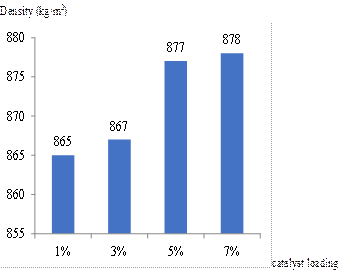
Fig. 11 Methyl ester
density vs catalyst loading in the transesterification step.
The
standard requires the measurement of biodiesel density at 15 °C.[47] This measurement is crucial in
determining the quantity of biodiesel injected into the fuel combustion system.[48] The
density of biodiesel is affected by the level of unsaturation in the fatty acid
methyl esters. Generally, biodiesel is denser than conventional diesel, but
when blends with petroleum diesel, the density of the fuel blend decreases.[49] Table 3 provides a comparison of the density at 15
°C for various biodiesel sources, ranging from 889 kg/m3 for mustard
biodiesel to 867 kg/m3, for sesame and coconut biodiesel.
Table 3. Properties
of biodiesels from 8 different vegetative oil sources.[49-53]
|
Biodiesel sources
|
Density (kg/m3)
|
Viscosity (cSt)
|
Flash point (oC)
|
Calorific value
(MJ/kg)
|
|
Soybean
|
882
|
4.15
|
160
|
39.8
|
|
Coconut
|
867
|
3.14
|
118
|
38.2
|
|
Mustard
|
888.9
|
5.53
|
169
|
41.9
|
|
Sunflower
|
869
|
4.10
|
183
|
40.6
|
|
Palm
|
880
|
4.52
|
175
|
34.4
|
|
Sesame
|
867
|
4.58
|
180
|
40.1
|
|
Camelia
|
885
|
4.53
|
150
|
52.2
|
|
Jatropha
|
880
|
4.80
|
176
|
40.8
|
Viscosity
affects the engine combustion, because if it is too low or too high the fuel
injector will not atomize optimally and combustion will produce black smoke in
the exhaust: ASTM D445 specifies a viscosity in the range of 1.8–4.1 cSt, whereas biodiesel requires a viscosity in the range of
3.5–5 cSt. Fig. 12 shows
that our biodiesel had a somewhat higher viscosity than the ASTM target for
every catalyst loading, but the 1% loading led to an insignificantly higher
viscosity than the lowest value.

Fig. 12 Methyl ester
viscosity vs catalyst content.
Biodiesel
exhibits a higher kinematic viscosity value compared to petroleum diesel due to
its larger molecular mass.[50]
The presence of high kinematic viscosity can lead to inadequate fuel
atomization, resulting in inefficient combustion and the accumulation of dirt
and debris. Conversely, low kinematic viscosity promotes the formation of small
fuel droplets, facilitating fuel transfer for combustion and enhancing thermal
efficiency.[49] The
standard measurement for kinematic viscosity is conducted at 40 °C.
The
flash point is the temperature at which the fuel will spontaneously ignite.
High flash point fuels are safe from accidental combustion during use. For
storage and transportation, ASTM D93 requires diesel fuel to have a flash point
of at least 52°C and may
be slightly lower in colder countries. For biodiesel fuel, the flash point was
required to be higher than120 °C. Fig. 13 that all biodiesels produced in this study considerably
exceeded the ASTM D93 requirement.
In standard atmospheric conditions, the ignition point of biodiesel fuel is the
lowest temperature point.[51]
The flash point value of biodiesel is always higher than that of fossil fuel
diesel. The flash point value of conventional diesel ranges between 55 – 65°C.
The reason for the higher flash point values of biodiesel is its low
volatility. This characteristic makes biodiesel safer during transportation and
storage.[52] Table 3 shows
that the flash point values of various biodiesel sources range from 118.5°C to
183°C for coconut and rubber biodiesel, respectively.

Fig. 13 Methyl ester flash
point vs catalyst loading.
Calorific
value generally describes the energy produced per unit mass of fuel or per unit
volume, i.e. the heat that will be obtained from the fuel combustion and has a
direct effect on engine efficiency. If the heat value is high, it will make the
engine stronger round speed. The heating value of biodiesel (39 MJ/kg) is
usually lower than that of diesel (48.6 MJ/kg), due to the oxygen content. Fig. 14 shows that the calorific value of our methyl
ester was lower than the target for diesel engines, but may be adequate for
applications, e.g. burners, where the calorific value is less critical.

Fig. 14 Methyl ester
calorific value vs catalyst content in transesterification.
4. Conclusions
Optimal
conditions for methyl ester production from acid black oil in a two-step
chemical process, used esterification of the oil and methanol with sulfuric
acid as a catalyst, followed by transesterification catalyzed by CaO. In the
esterification reaction, increasing the molar ratio of methanol to oil and
increased sulfuric acid content resulted in free fatty acids reduced to the
level less than 1.8%. For the transesterification, optimal conditions were 60 °C,
reaction time 180 min, catalyst volume 5% w/w, methanol: oil ratio 18:1 v/v.
The
flash point and viscosity of the methyl ester decreased with the CaO catalyst
loading. Also the calorific value of our esters (27–29
MJ/kg) was lower than the target for diesel engines (39–42 MJ/kg), but
increasing catalyst loading tended to result in a higher calorific value. The
density was found to be in the standard range of 840–900 kg/m3 but
tended to increase with increasing amount of catalyst compared to diesel The
flash point, viscosity and density of the methyl esters were higher than those
of diesel. However, the calorific value was lower than that of diesel fuel and
lower than the standards, it was found that the resulting oil was still below
the ASTM standard.
Acknowledgements
This Research was financially supported by Faculty of
Engineering, Mahasarakham University. The authors
would like to express their sincere gratitude to Saengsook
Industry Co., Ltd for providing black acid oil.
Conflict of Interest
There is no conflict of interest.
Supporting Information
Applicable.
References
[1] D. F. Correa, H. L. Beyer, H. P. Possingham, S. R. Thomas-Hall, P. M. Schenk, Biodiversity
impacts of bioenergy production: Microalgae vs.
first generation biofuels, Renewable and Sustainable Energy Reviews, 2017, 74, 1131-1146, doi:
10.1016/j.rser.2017.02.068.
[2]
B. Azeem, K. KuShaari, M. Naqvi, L. Kok Keong, M. K. Almesfer, Z. Al-Qodah, S. R.
Naqvi, N. Elboughdiri, Production and
characterization of controlled release urea using biopolymer and geopolymer as
coating materials, Polymers, 2020, 12, 400, doi: 10.3390/polym12020400.
[3]
S. Jain, M. P. Sharma, Prospects of biodiesel from Jatropha in India: a review,
Renewable and
Sustainable Energy Reviews, 2010, 14, 763-771, doi: 10.1016/j.rser.2009.10.005.
[4]
N. C. Om Tapanes, D. A. Gomes Aranda, J. W. de Mesquita Carneiro, O. A. Ceva Antunes, Transesterification of Jatropha curcas oil glycerides: theoretical and experimental studies
of biodiesel reaction, Fuel, 2008, 87,
2286-2295, doi: 10.1016/j.fuel.2007.12.006.
[5]
Z. Helwani, M. R. Othman, N. Aziz, W. J. N. Fernando,
J. Kim, Technologies for production of biodiesel focusing on green catalytic
techniques: a review, Fuel Processing Technology, 2009, 90, 1502-1514, doi:
10.1016/j.fuproc.2009.07.016.
[6]
I. B. Banković-Ilić, O. S. Stamenković, V. B. Veljković,
Biodiesel production from non-edible plant oils, Renewable and Sustainable Energy Reviews,
2012, 16, 3621-3647, doi:
10.1016/j.rser.2012.03.002.
[7]
A. Abbaszaadeh, B. Ghobadian,
M. R. Omidkhah, G. Najafi, Current biodiesel production technologies: a
comparative review, Energy Conversion and Management, 2012, 63, 138-148, doi:
10.1016/j.enconman.2012.02.027.
[8]
E. F. Aransiola, T. V. Ojumu,
O. O. Oyekola, T. F. Madzimbamuto,
D. I. O. Ikhu-Omoregbe, A review of current
technology for biodiesel production: state of the art, Biomass and Bioenergy, 2014, 61, 276-297, doi:
10.1016/j.biombioe.2013.11.014.
[9]
Y. Tang, Y. Yang, H. Liu, T. Yan, Z. Zhang, Preparation of nano-CaO and
catalyzing tri-component coupling transesterification to produce biodiesel, Inorganic and
Nano-Metal Chemistry, 2020, 50,
501-507, doi: 10.1080/24701556.2020.1720726.
[10] A. U. Badnore, N. L.
Jadhav, D. V. Pinjari, A. B. Pandit, Efficacy of
newly developed nano-crystalline calcium oxide catalyst for biodiesel
production, Chemical Engineering and Processing - Process Intensification,
2018, 133, 312–319, https://doi.org/10.1016/j.cep.2018.09.007.
[11]
J. Poosumas, K. Ngaosuwan,
A. T. Quitain, S. Assabumrungrat, Role of ultrasonic
irradiation on transesterification of palm oil using calcium oxide as a solid
base catalyst, Energy
Conversion and Management, 2016, 120, 62-70, doi: 10.1016/j.enconman.2016.04.063.
[12]
A. Bouaid, N. El Boulifi,
M. Martinez, J. Aracil, Optimization of a two-step
process for biodiesel production from Jatropha curcas
crude oil, International
Journal of Low-Carbon Technologies, 2012, 7, 331-337, doi: 10.1093/ijlct/ctr047.
[13]
Ž. Kesić, I. Lukić, M. Zdujić,
Č. Jovalekić, V. Veljković,
D. Skala, Assessment of CaTiO3, CaMnO3, CaZrO3 and Ca2Fe2O5
perovskites as heterogeneous base catalysts for biodiesel synthesis, Fuel Processing
Technology, 2016, 143,
162-168, doi: 10.1016/j.fuproc.2015.11.018.
[14]
R. Yahyaee, B. Ghobadian,
G. Najafi, Waste fish oil biodiesel as a source of renewable fuel in Iran, Renewable and
Sustainable Energy Reviews, 2013, 17, 312-319, doi: 10.1016/j.rser.2012.09.025.
[15]
P. Imani-Mofrad, Z. H. Saeed, M. Shanbedi,
Experimental investigation of filled bed effect on the thermal performance of a
wet cooling tower by using ZnO/water nanofluid, Energy Conversion and Management,
2016, 127, 199-207, doi:
10.1016/j.enconman.2016.09.009.
[16]
F. Toldrá-Reig, L. Mora, F. Toldrá,
Trends in biodiesel production from animal fat waste, Applied Sciences, 2020, 10, 3644, doi: 10.3390/app10103644.
[17]
J. Abraham, R.S. Kumar, F. Xavier, D. Mathew, Biodiesel production from broiler
chicken waste, International Agricultural
Engineering Journal, 2015, 9, 1190-1193, doi:
10.5281/ZENODO.1110157.
[18]
D. Papargyriou, E. Broumidis,
M. de Vere-Tucker, S. Gavrielides, P. Hilditch, J. T.
S. Irvine, A. D. Bonaccorso, Investigation of solid base catalysts for
biodiesel production from fish oil, Renewable Energy, 2019, 139, 661-669, doi: 10.1016/j.renene.2019.02.124.
[19]
I. Lawan, Z. N. Garba, W. Zhou, M. Zhang, Z. Yuan, Synergies between the
microwave reactor and CaO/zeolite catalyst in waste lard biodiesel production, Renewable Energy,
2020, 145, 2550-2560, doi:
10.1016/j.renene.2019.08.008.
[20]
N. A. Tajuddin, A. F. Lee, K. Wilson, Production of biodiesel via catalytic
upgrading and refining of sustainable oleagineous
feedstocks, In
Handbook of Biofuels Production, Woodhead Publishing: Sawston, UK, 2016, 121-164, doi:
10.1016/B978-0-08-100455-5.00006-0.
[21]
A. Macario, G. Giordano, B. Onida, D. Cocina, A. Tagarelli,
A. M. Giuffrè, Biodiesel production process by
homogeneous/heterogeneous catalytic system using an acid–base catalyst, Applied Catalysis A: General,
2010, 378, 160-168, doi:
10.1016/j.apcata.2010.02.016.
[22]
R. Ahmed, K. Huddersman, Review of biodiesel
production by the esterification of wastewater containing fats oils and grease
(FOGs), Journal
of Industrial and Engineering Chemistry, 2022, 110, 1-14, doi: 10.1016/j.jiec.2022.02.045.
[23]
M. Catarino, S. Martins, A. P. Soares Dias, M. F. Costa Pereira, J. Gomes,
Calcium diglyceroxide as a catalyst for biodiesel
production, Journal
of Environmental Chemical Engineering, 2019, 7, 103099, doi: 10.1016/j.jece.2019.103099.
[24]
A. P. S. Dias, J. Puna, J. Gomes, M. J. S. Correia, J. João Bordado,
Biodiesel Production over Lime Catalyst: Bulk and Surface Catalyst Dynamics, Renewable Energy, 2016, 99, 622-630, doi:
10.1016/j.renene.2016.07.033.
[25]
J. K. Efavi, D. Kanbogtah,
V. Apalangya, E. Nyankson,
E. K. Tiburu, D. Dodoo-Arhin, B. Onwona-Agyeman,
A. Yaya, The effect of NaOH catalyst concentration and extraction time on the
yield and properties of Citrullus vulgaris seed oil as a potential biodiesel
feed stock, South
African Journal of Chemical Engineering, 2018, 25, 98-102, doi: 10.1016/j.sajce.2018.03.002.
[26]
Z. Abelniece, L. Laipniece, V. Kampars,
Biodiesel production by interesterification of rapeseed oil with methyl formate in presence of potassium alkoxides, Biomass Conversion
and Biorefinery, 2022, 12,
2881-2889, doi: 10.1007/s13399-020-00874-z.
[27]
H. Cao, Z. Zhang, X. Wu, X. Miao, Direct biodiesel production from wet
microalgae biomass of Chlorella pyrenoidosa through in situ transesterification, BioMed Research
International, 2013, 2013,
930686, doi: 10.1155/2013/930686.
[28]
A. Sagiroglu, I. Selen, M. Ozcan, H. Paluzar, N. Toprakkiran,
Comparison of biodiesel productivities of different vegetable oils by acidic
catalysis, Chemical
Industry and Chemical Engineering Quarterly, 2011, 17, 53-58, doi:
10.2298/ciceq100114054s.
[29]
M. Tariq, S. Ali, N. Khalid, Activity of homogeneous and heterogeneous
catalysts, spectroscopic and chromatographic characterization of biodiesel: a
review, Renewable
and Sustainable Energy Reviews, 2012, 16, 6303-6316, doi: 10.1016/j.rser.2012.07.005.
[30]
H. Fukuda, A. Kondo, H. Noda, Biodiesel fuel production by transesterification
of oils, Journal
of Bioscience and Bioengineering, 2001, 92, 405-416, doi: 10.1263/jbb.92.405.
[31]
S. H. Y. S. Abdullah, N. H. M. Hanapi, A. Azid, R. Umar, H. Juahir, H.
Khatoon, A. Endut, A review of biomass-derived heterogeneous catalyst for a
sustainable biodiesel production, Renewable and Sustainable Energy Reviews, 2017, 70, 1040-1051, doi:
10.1016/j.rser.2016.12.008.
[32]
Natasha, I. Bibi, M. Shahid, N. K. Niazi, F. Younas, S. R. Naqvi, S. M.
Shaheen, M. Imran, H. Wang, K. M. Hussaini, H. Zhang, J. Rinklebe,
Hydrogeochemical and health risk evaluation of arsenic in shallow and deep
aquifers along the different floodplains of Punjab, Pakistan, Journal of
Hazardous Materials, 2021, 402,
124074, doi: 10.1016/j.jhazmat.2020.124074.
[33]
P. L. Boey, G. P. Maniam, S. A. Hamid, Biodiesel
production via transesterification of palm olein using waste mud crab (Scylla
serrata) shell as a heterogeneous catalyst, Bioresource Technology, 2009, 100, 6362-6368, doi:
10.1016/j.biortech.2009.07.036.
[34]
N. Nakatani, H. Takamori, K. Takeda, H. Sakugawa,
Transesterification of soybean oil using combusted oyster shell waste as a
catalyst, Bioresource
Technology, 2009, 100,
1510-1513, doi: 10.1016/j.biortech.2008.09.007.
[35]
M. Kouzu, A. Kajita, A. Fujimori, Catalytic activity
of calcined scallop shell for rapeseed oil transesterification to produce
biodiesel, Fuel,
2016, 182, 220-226, doi:
10.1016/j.fuel.2016.05.111.
[36]
Z. Wei, C. Xu, B. Li, Application of waste eggshell as low-cost solid catalyst
for biodiesel production, Bioresource Technology, 2009, 100, 2883-2885, doi:
10.1016/j.biortech.2008.12.039.
[37]
R. Ahmad, R. Rohim, N. Ibrahim, Properties of waste eggshell as calcium oxide
catalyst, Applied
Mechanics and Materials, 2015, 754,
171-175, doi: 10.4028/www.scientific.net/amm.754-755.171.
[38]
H. Liu, L. Su, Y. Shao, L. Zou, Biodiesel production catalyzed by cinder
supported CaO/KF particle catalyst, Fuel, 2012, 97,
651-657, doi: 10.1016/j.fuel.2012.02.002.
[39]
Y. Tang, M. Meng, J. Zhang, Y. Lu, RETRACTED: efficient preparation of
biodiesel from rapeseed oil over modified CaO, Applied Energy, 2011, 88, 2735-2739, doi:
10.1016/j.apenergy.2011.02.033.
[40]
P.-L. Boey, G. P. Maniam, S. A. Hamid, D. M. H. Ali,
Utilization of waste cockle shell (Anadara granosa) in biodiesel production from palm olein:
Optimization using response surface methodology, Fuel, 2011, 90, 2353-2358, doi: 10.1016/j.fuel.2011.03.002.
[41]
N. Subramonia Pillai, P. S. Kannan, S. C. Vettivel, S. Suresh, Optimization of transesterification of
biodiesel using green catalyst derived from Albizia Lebbeck
Pods by mixture design, Renewable Energy, 2017, 104, 185-196, doi: 10.1016/j.renene.2016.12.035.
[42] X. Deng, Z. Fang, Y.-H. Liu, Ultrasonic transesterification
of Jatropha curcas L. oil to biodiesel by a two-step
process, Energy
Conversion and Management, 2010, 51, 2802-2807, doi: 10.1016/j.enconman.2010.06.017.
[43]
A. Hameed, S. R. Naqvi, U. Sikandar, W.-H. Chen, One-step biodiesel production
from waste cooking oil using CaO promoted activated carbon catalyst from prunus
persica seeds, Catalysts,
2022, 12, 592, doi:
10.3390/catal12060592.
[44]
V. G. Deshmane, Y. G. Adewuyi, Synthesis and kinetics of biodiesel formation
via calcium methoxide base catalyzed transesterification reaction in the
absence and presence of ultrasound, Fuel, 2013, 107,
474-482, doi: 10.1016/j.fuel.2012.12.080.
[45]
J. Boro, L. J. Konwar, A. J. Thakur, D. Deka, Ba doped CaO derived from waste
shells of T striatula (TS-CaO) as heterogeneous
catalyst for biodiesel production, Fuel, 2014, 129,
182-187, doi: 10.1016/j.fuel.2014.03.067.
[46]
M. K. Lam, K. T. Lee, A. R. Mohamed, Homogeneous, heterogeneous and enzymatic
catalysis for transesterification of high free fatty acid oil (waste cooking
oil) to biodiesel: a review, Biotechnology Advances, 2010, 28, 500-518, doi:
10.1016/j.biotechadv.2010.03.002.
[47]
E. Alptekin, M. Canakci, Determination of the density
and the viscosities of biodiesel–diesel fuel blends, Renewable Energy, 2008, 33, 2623-2630, doi:
10.1016/j.renene.2008.02.020.
[48]
R. Sakthivel, K. Ramesh, R. Purnachandran, P. Mohamed
Shameer, A review on the properties, performance and emission aspects of the
third-generation biodiesels, Renewable and Sustainable Energy Reviews, 2018, 82, 2970-2992, doi:
10.1016/j.rser.2017.10.037.
[49]
D. Singh, D. Sharma, S. L. Soni, S. Sharma, D. Kumari, Chemical compositions,
properties, and standards for different generation biodiesels: a review, Fuel,
2019, 253, 60-71, doi:
10.1016/j.fuel.2019.04.174.
[50]
A. Demirbas, Progress and recent trends in biodiesel
fuels, Energy
Conversion and Management, 2009, 50, 14-34, doi: 10.1016/j.enconman.2008.09.001.
[51]
N. D. D. Carareto, C. Y. C. S. Kimura, E. C.
Oliverira, M. C. Costa, A. J. A. Meirelles, Flash points of mixtures containing
ethyl esters or ethylic biodiesel and ethanol, Fuel,
2012, 96, 319-326, doi: 10.1016/j.fuel.2012.01.025.
[52]
M. M. K. Bhuiya, M. G. Rasul, M. M. K. Khan, N. Ashwath, A. K. Azad, M. A.
Hazrat, Prospects of 2nd generation biodiesel as a sustainable fuel–Part 2:
properties, performance and emission characteristics, Renewable and Sustainable Energy Reviews,
2016, 55, 1129-1146, doi:
10.1016/j.rser.2015.09.086.
[53] A. A. Refaat, Correlation between the chemical
structure of biodiesel and its physical properties, International
Journal of Environmental Science & Technology, 2009, 6,
677-694, doi: 10.1007/BF03326109.
