Comparative Chloroplast Genomics of Calligonum leucocladum from Kazakhstan: Genetic Basis for Arid Adaptation and Agroforestry Applications
Abstract
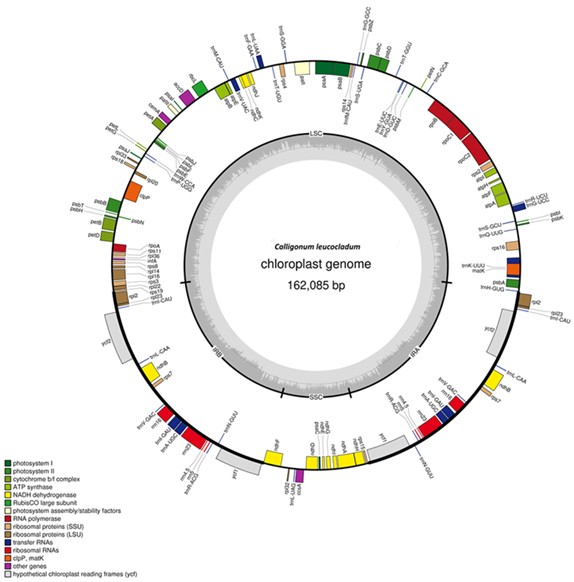
Calligonum leucocladum (Schrenk) Bunge is a key desert shrub in Central Asia that plays an important role in dune stabilization and maintaining the ecological sustainability of arid landscapes. To elucidate the genetic mechanisms underlying ecological adaptation and to assess the species’ potential for agroforestry applications, we sequenced and compared the complete chloroplast genomes of three geographically distinct populations from Kazakhstan. The chloroplast genome size ranged from 162,085 to 162,187 base pairs and exhibited the typical quadripartite structure, consisting of large and small single-copy regions (LSC, SSC) and two inverted repeat (IR) regions. Comparative genomic analysis revealed a conserved plastome organization in populations P1 and P2, whereas population P3 showed contraction of the IR region and expansion of the SSC region, indicating localized genomic adaptation. Analyses of codon usage and SSR motifs revealed a predominance of A/T content and identified potential loci for population-level marker development. Phylogenetic analysis confirmed a close intraspecific relationship among Calligonum leucocladum populations, supporting the taxonomic integrity of the species within the Polygonaceae family. These findings provide novel genomic insights into the adaptive evolution of Calligonum leucocladum and establish a valuable foundation for its conservation, ecological restoration, and application in sustainable agroforestry practices in the arid regions of Kazakhstan.